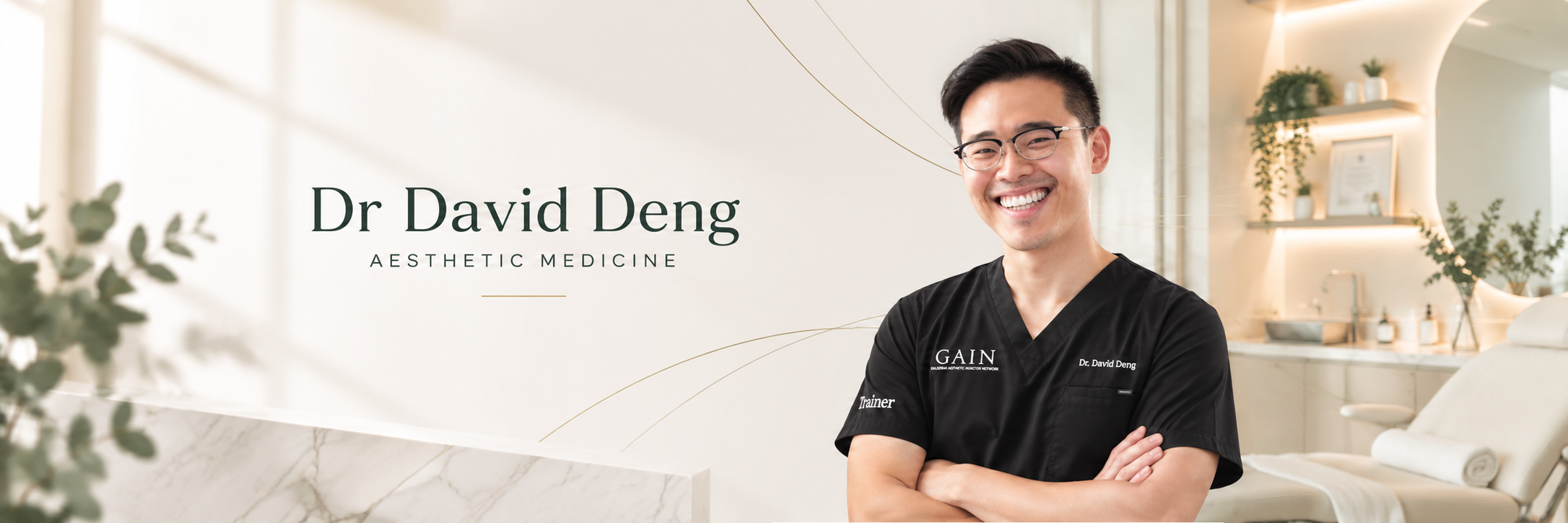
Facial Rejuvenation Starts With Understanding What Has Changed
I assess facial structure, volume, tissue laxity, muscle activity and skin quality before deciding whether treatment is appropriate and which approach may be relevant.
Treatment planning should follow the anatomy, rather than starting with a particular device or injectable.
What Would You Like to Improve?
Sagging Face & Jowls
Understand laxity, tissue descent, volume and support. VolumeFacial Volume Loss
Temples, cheeks and other areas that may appear hollow. Eye areaTired Eyes & Under-Eye Hollows
Separate hollowing from eye bags, pigmentation and skin quality. ExpressionFine Lines & Wrinkles
Assess movement-related lines and other ageing changes. TextureAcne Scars & Enlarged Pores
Treatment depends on scar type, depth and skin characteristics. Skin qualityDull, Dehydrated or Crepey Skin
Explore hydration, texture and skin-quality approaches. Weight changePost-Weight-Loss Face
Hollowing, laxity and facial proportion changes after weight loss. Face + neckNeck Ageing
Laxity, lines, skin quality and neck contour are different issues.Core Areas of Focus
Non-Surgical Facelift
Assessment and treatment planning for facial laxity, jowls, lower-face ageing and loss of definition.
Explore non-surgical faceliftDermal Fillers
Selected structural support or volume restoration for facial balancing, rather than adding volume everywhere.
Explore dermal fillersAnti-Wrinkle
Targeted muscle relaxation may be considered for selected expression lines and contour-related concerns.
Explore anti-wrinkleSkin Boosters
Skin-quality treatments for hydration, texture, fine lines and selected areas such as the under-eye and neck.
Explore skin boostersCollagen Stimulators
Injectable approaches designed around gradual collagen support, tissue quality and selected volume concerns.
Explore collagen stimulatorsAcne Scars + Pores
Scar treatment is planned according to morphology rather than using the same device for every scar.
Explore acne scars + poresHow I Assess the Face
I do not start by deciding which machine or injectable to use. I start by working out what is contributing to the concern.
Facial structure
I look at the relationship between the cheeks, chin, jawline, temples and the overall shape of the face.
Volume distribution
Ageing and weight changes can make some areas appear hollow while other areas become heavier or less defined.
Tissue laxity
I assess whether sagging or looseness is a meaningful part of the problem before considering a tightening treatment.
Muscle activity
Expression and lower-face muscle activity can influence wrinkles, facial contour and selected neck concerns.
Skin quality
Hydration, pigmentation, pores, texture and fine lines are separate from facial structure and may need a different treatment category.
Dr David Deng
Outside medicine, David has long had an interest in photography and previously served as president of his high school photography club. That interest in composition, proportion and visual balance has continued to influence the way he observes faces and approaches facial aesthetics.
His approach is guided by the belief that every face is different and that aesthetic treatment should complement the individual rather than follow a fixed template. He places particular emphasis on facial balance, proportion and natural-looking rejuvenation.
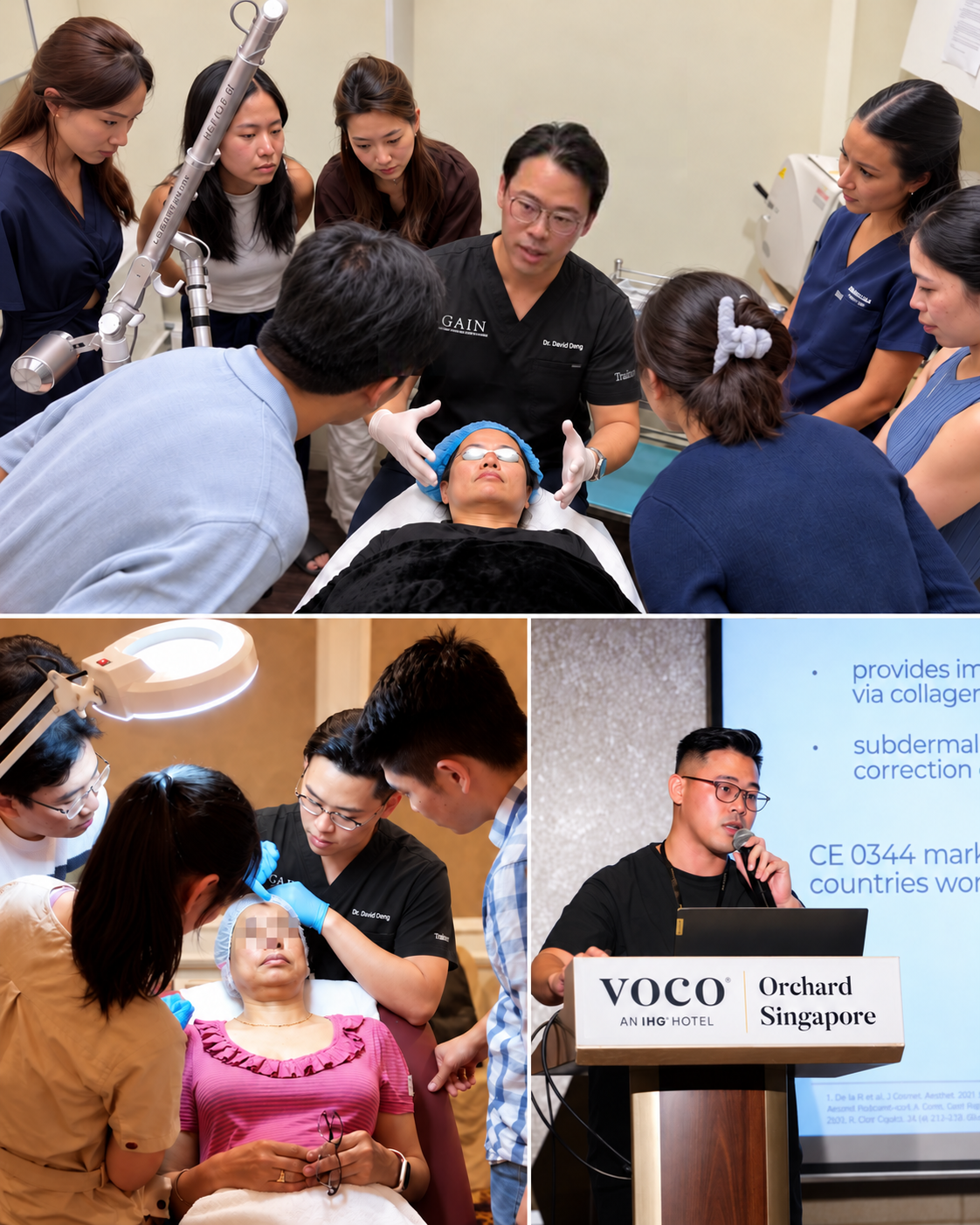
Medical Educator, Physician Trainer & Invited Speaker
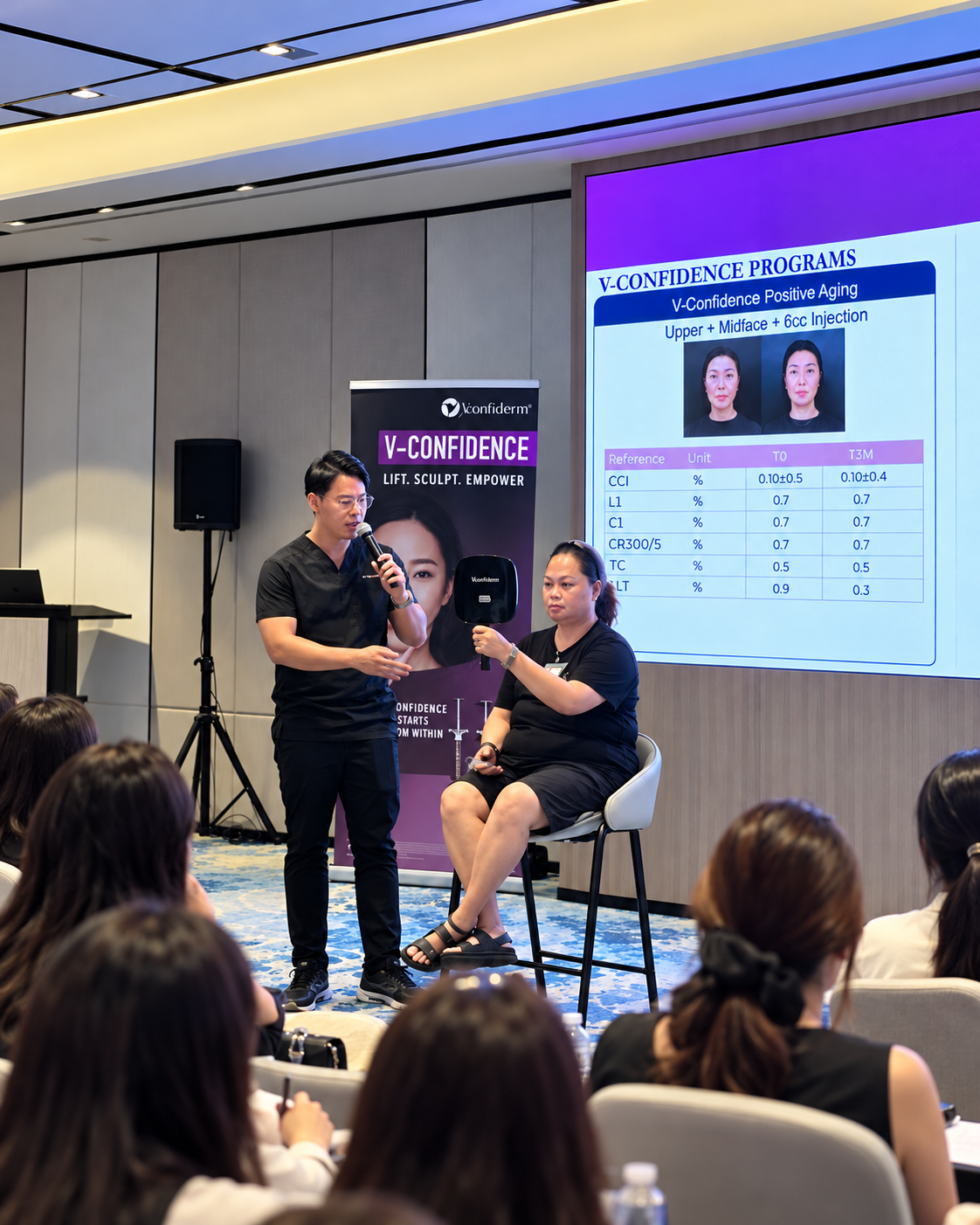
Physician Trainer & Invited Speaker for leading international aesthetic medicine organisations, including AAAM and Galderma.
Explore Facial Rejuvenation in More Detail
Non-Surgical Facelift
Lifting, volume, support and skin quality are not the same problem.
HIFU Face Lifting
When focused ultrasound may — and may not — be relevant.
Facial Balancing & Full-Face Fillers
Why full-face assessment does not mean filling the whole face.
Chin & Jawline Filler
Structural support, pre-jowl hollowing and jawline definition.
Tear Trough & Under-Eye Filler
Hollows, eye bags, pigmentation and puffiness need to be separated.
Post-Weight-Loss Facial Change
Volume loss, laxity and changing facial proportions after major weight reduction.
Aesthetic Medicine FAQs
What is regenerative aesthetics?
Regenerative aesthetics refers to approaches that aim to support the skin and underlying tissues through processes such as collagen stimulation, tissue repair and improvement in skin quality. Rather than focusing only on adding volume or changing facial features, the approach looks at how the skin and facial tissues can be supported over time.
What is aesthetic medicine?
Aesthetic medicine focuses on non-surgical and minimally invasive approaches that may be used to address facial ageing, skin quality, facial proportions and other appearance-related concerns following medical assessment.
How do I know which aesthetic treatment is suitable for me?
The appropriate approach depends on what is contributing to your concern. Facial structure, volume, tissue laxity, muscle activity and skin quality may all play different roles, so treatment selection should follow assessment rather than a fixed protocol.
Can different aesthetic treatments be combined?
Sometimes. More than one factor may contribute to the same concern, so a combination or staged approach may be considered where appropriate. The sequence and timing depend on the individual and the treatments involved.
How natural can aesthetic results look?
The aim of treatment planning is not to change every feature. A more conservative approach focuses on facial balance, proportion and addressing selected concerns while preserving the individual’s natural characteristics.
What should I expect from an aesthetic consultation?
A consultation usually begins with the concern you have noticed, followed by assessment of the relevant facial or skin factors. Treatment options, suitability, limitations and expected recovery can then be discussed before deciding whether to proceed.